Your Solar Panels Just Came Through a Scottish Winter — Here's What It's Costing You
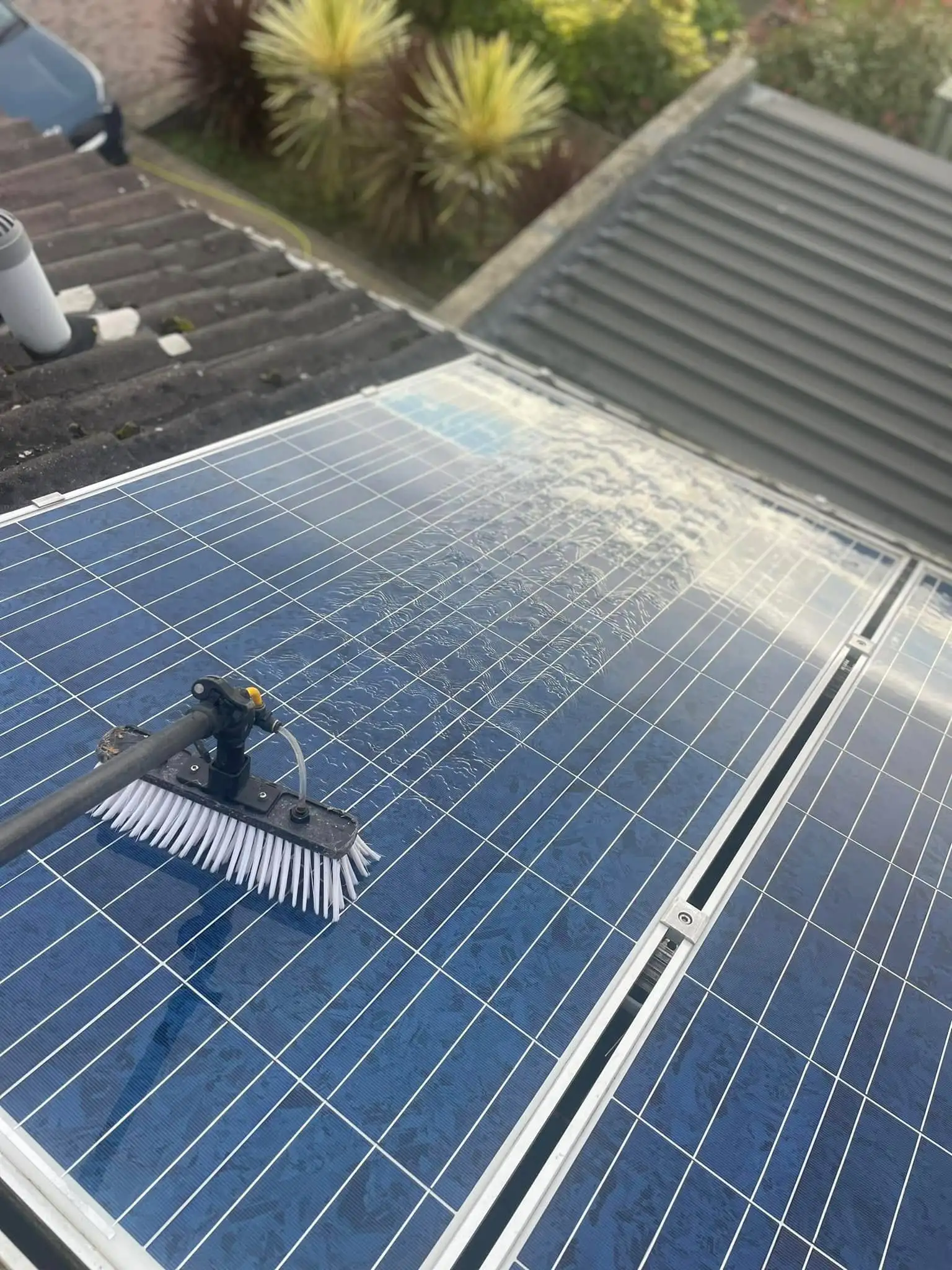
The days are getting longer, the sun is climbing higher each week, and your solar panels are entering the months when they should be generating the most power. The problem is that those same panels have just spent five months sitting through a Scottish winter — being coated in algae, road particulates, haar residue, and an accumulation of bird droppings that didn't wash off in the rain, because rain doesn't actually clean solar panels. Not properly. And every percentage point of lost efficiency costs more now, in spring and summer, than at any other time of year.
If your panels haven't been cleaned since last spring — or ever — this is the moment that matters most.
What a Fife Winter Deposits on Your Panels
Solar panels are horizontal or near-horizontal surfaces at roof height, which makes them collection points for everything that the wind and rain move across your property:
- Algae and moss— biological growth that establishes on the panel frame and edges during winter's persistent damp. Moss in particular can extend onto the panel surface itself and cast a shadow across cells even when it's not directly blocking them.
- Bird droppings— the most damaging type of soiling. Droppings are opaque, highly localised, and don't rinse off in rain. A single dropping over a cell creates a shading effect that can reduce the output of an entire string of connected cells, not just the cell underneath.
- Haar and coastal particulates — the fine grimy film deposited by sea fog and coastal air that dries in a thin, partially opaque layer across the panel surface. Individually insignificant, cumulatively it reduces light transmission measurably.
- General atmospheric grime — dust, pollen, and pollution that settles on panel surfaces over months and bonds to any moisture present.
Why Rain Doesn't Clean Solar Panels
This is the most persistent myth in solar panel maintenance. Rain does rinse loose surface dust to some degree — but it doesn't remove bird droppings, biological growth, or the fine film of particulates that bonds to the glass surface over time. In fact, in areas with hard water or coastal air, rain can leave mineral deposits on the glass as it evaporates, making the surface slightly more opaque than before.
The self-cleaning glass that some panels are manufactured with improves water runoff, but it doesn't address the types of soiling that accumulate over a Scottish winter. Panels that “look clean” from the ground frequently show substantial grime when inspected at close range — and the generation data usually confirms it.
The Efficiency Numbers — What Soiling Actually Costs
Industry research consistently shows that soiled panels lose between 15% and 25% of their potential output — and that the figure is towards the higher end for panels with significant bird dropping coverage or biological growth. For a typical domestic installation in Fife generating around 3,500 kWh per year, a 20% efficiency loss represents 700 kWh of lost generation annually.
That loss matters most in spring and summer when generation is at its peak. The months from March to August account for the majority of annual solar output at Scottish latitudes — which means soiling that reduces generation during these months has a disproportionate impact on your annual total and on your electricity bill.
A professional clean typically costs a fraction of the value of the generation recovered in a single peak season. For most Fife installations, it pays for itself within weeks of being carried out in spring.
Bird Droppings — Why They're a Particular Problem
Bird droppings deserve separate mention because they behave differently from general grime. A dropping placed over a solar cell creates what's called a “hot spot” — the shaded cell doesn't generate electricity and instead acts as a resistor, consuming power from surrounding cells. In a string-connected array, this can reduce the output of multiple panels, not just the one with the dropping on it.
Droppings also become harder to remove over time as they dry and bond to the glass surface. Attempting to remove them with abrasive materials risks scratching the anti-reflective coating on the panel. Professional pure water cleaning softens and lifts droppings without surface damage.
Why Pure Water Is the Only Safe Cleaning Method
Solar panels cannot be pressure washed. High-pressure water can force moisture into the panel junction boxes, damage the frame seals, and void manufacturer warranties. Soap or detergent residue left on the glass surface leaves a film that attracts grime faster after cleaning than a clean panel would.
We use deionised pure water fed through a soft brush on an extended reach pole — the same system we use for window cleaning. Pure water has no mineral content, so it leaves no residue when it dries. The glass surface comes out genuinely clean rather than just rinsed, and there is no risk to the panel, its seals, or its warranty.
The Energy Saving Trust recommends keeping solar panels clean and unshaded to maintain generation performance — in Scotland's climate, annual professional cleaning is the most practical way to achieve this. See our full solar panel cleaning service pagefor more on how we work and what's included. If your windows also need attention while we're on site, we can often combine a window clean on the same visit.
If your panels are entering their best generation months with winter grime on them, now is the time to deal with it. Get a free quote or call us on 07572 454128. We cover all of Fife and can usually get to you quickly.
Need a quote?
Free quotes across all of Fife. We respond within a few hours — usually much faster.
Get a Free Quote07572 454128