What Winter Has Done to Your Gutters — and Why Now Is the Time to Clear Them
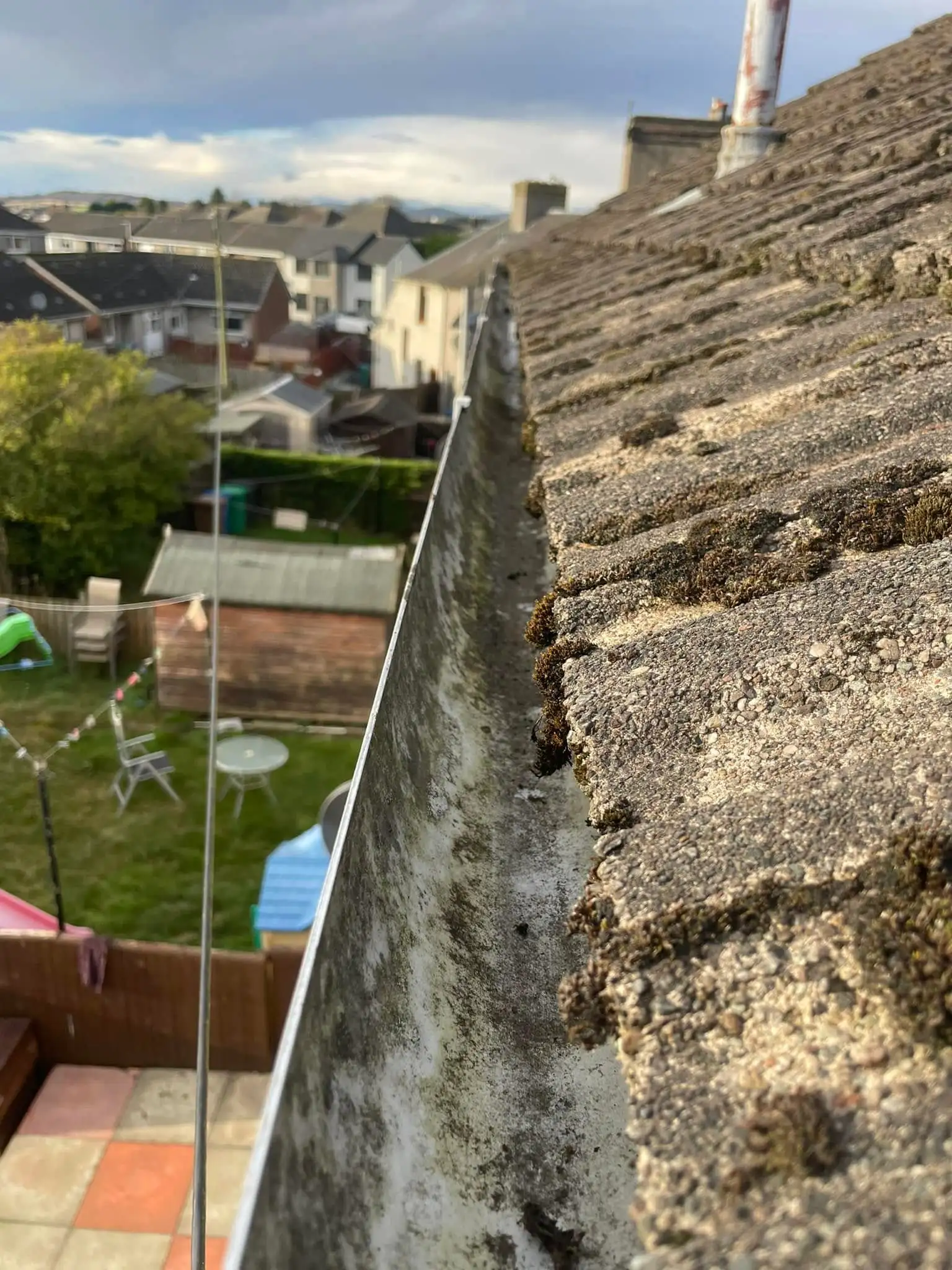
Gutters in Fife don't have an easy winter. From October onwards, the combination of autumn leaf fall, winter storms rolling in off the Forth, persistent rain, and freeze-thaw cycles packs debris into guttering faster than almost anywhere else in Scotland. By the time March arrives, what's sitting up there is often a compressed mass of decomposed leaves, moss, grit, and standing water — and it's been quietly overflowing every time it rains hard.
Most homeowners don't realise there's a problem until they see the evidence at ground level: staining on fascia boards, damp patches on external walls, or water spilling over the front of the gutter during heavy rain. By then, the damage is usually already done.
What Accumulates in Fife Gutters Over Winter
Autumn leaf fall is the starting point, but it's only part of what ends up in guttering over a Scottish winter:
- Decomposed leaves — autumn leaf debris compacts and breaks down into a dense, wet mulch that holds water and blocks downpipes far more effectively than fresh leaves do.
- Moss and lichen — moss from roof tiles washes down into gutters during heavy rain and builds up over months. Once established, it actively holds water and accelerates further blockage.
- Storm debris— twigs, fragments of roof tile, grit, and other material brought down by the winter storms that hit Fife's east coast.
- Sediment — fine grit that settles at the base of the gutter and around downpipe inlets, gradually narrowing flow capacity.
The result is guttering that may look intact from the ground but is performing at a fraction of its capacity — or not at all.
What a Blocked Gutter Actually Does to Your Property
Gutters exist to channel rainwater away from your walls, fascias, and foundations. When they're blocked, that water has to go somewhere — and it goes where you least want it.
Overflowing gutters run down fascia boards, softening and staining them over months. Water that breaches the fascia line gets into the soffit space, which can lead to rot in timber elements and damp in the roof space. Persistent overflow against an external wall causes the kind of slow moisture ingress that shows up as internal damp — often in upstairs rooms or on bedroom ceilings — long after the original cause is forgotten.
In older Fife properties with stone or roughcast render walls, this is particularly damaging. Moisture that penetrates render can cause spalling, cracking, and eventually structural issues if it reaches the masonry behind.
Signs You Can Spot from Ground Level
You don't need to get on a ladder to know your gutters probably need attention. Walk the perimeter of your property on the next wet day and look for:
- Water cascading over the front of the gutter during or after heavy rain
- Staining or tide marks on fascia boards directly below the gutterline
- Green or black streaking on external walls below downpipe positions
- Moss or plant growth visible above the gutter rim
- Sagging sections of guttering — a sign of water weight from a blocked section
- Damp patches on internal walls or ceilings near rooflines
Any of these is a reasonable indication that a proper gutter clear is overdue.
Why Spring — Not Autumn — Is the Right Time to Clear
Most people think of gutter cleaning as an autumn job, and autumn is certainly important — clearing gutters before the heaviest leaf fall gives water a clear run through winter. But spring clearing matters just as much, for a different reason: it's when you deal with the consequences of winter.
Spring rainfall in Fife is often heavier than people expect, and it arrives just as the debris from winter is most compacted and most likely to cause overflow. Clearing in March or April means your gutters are functioning properly heading into the wettest spring months, and you can identify any damage — cracked joints, failing brackets, displaced sections — before it causes further problems.
Waiting until autumn means running your gutters in a compromised state for another six months, with every heavy spring and summer downpour pushing more water over the edge and down your walls.
What a Professional Gutter Clear Involves
A professional gutter clear isn't just scooping out visible debris. We clear all material from the full run of guttering, flush the system to check downpipe flow, unblock any downpipe obstructions, and check the condition of joints, brackets, and seals while we're up there. If we spot any issues — a failing joint, a bracket that's worked loose, evidence of previous overflow damage to fascias — we'll flag it to you before we leave.
We work across all of Fife — Kirkcaldy, Dunfermline, Glenrothes, Leven, Cupar, and everywhere in between. If your gutters haven't been cleared since last autumn, or you can't remember when they were last done, spring is the time to deal with it. You can read more about what our gutter cleaning service covers, including soffit and fascia inspection. If your fascia boards have taken overflow damage, we can assess and clean those on the same visit.
The NHBC guidance on home maintenance recommends annual gutter inspection as part of standard property upkeep — in Fife's climate, twice yearly is more appropriate.
Get a free quote or call us on 07572 454128. We'll tell you what we find and what it costs before any work begins.
Need a quote?
Free quotes across all of Fife. We respond within a few hours — usually much faster.
Get a Free Quote07572 454128