Spring Roofline Check — What a Fife Winter Has Done to Your Soffits and Fascias
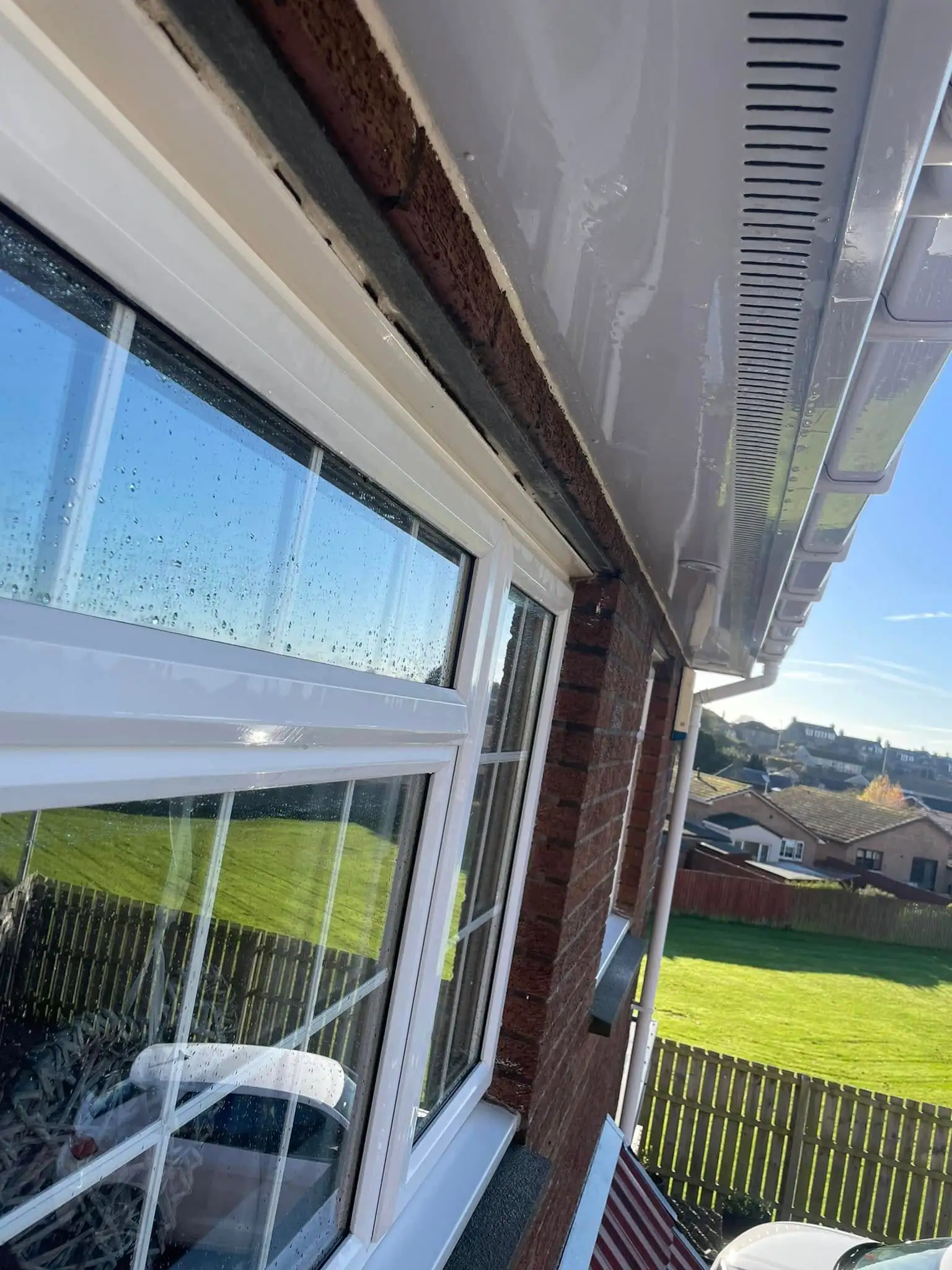
Walk to the end of your garden and look back at your house — properly, with your eyes on the roofline rather than the front door. What you'll see on most Fife properties in March is a roofline that's spent five months being battered by rain, coastal wind, and biological growth that thrives in cold, damp conditions. Dark streaking down the fascia boards. Green patches on the soffits. Debris packed into the joins. In most cases, it's been there since November. Nobody noticed because nobody looked.
Spring is the right time to look — and to deal with what you find — for two reasons. The winter damage is at its most visible now that the worst of the weather has passed. And bird nesting season begins in April, which means any open or debris-filled soffit space becomes a candidate for occupation within weeks.
What Happens to Fascias Over a Scottish Winter
Fascia boards sit at the junction of your roof and exterior wall, holding the guttering in place and sealing the roofline. They take the full force of rain, wind, and temperature change from October to March — and in Fife that means sustained punishment.
The problem is moisture retention. Algae and moss that establishes on fascia surfaces holds water against the board underneath, preventing it from drying out between rain events. On timber fascias, this leads to softening and early-stage rot. On uPVC, it causes surface staining and degradation that worsens every year it's left. And the overflow from blocked gutters — which is common after a Fife winter — runs directly down the fascia board on every heavy rainfall, compounding the moisture damage further.
The freeze-thaw cycles that Fife experiences through winter add another layer. Water that has penetrated softened or cracked fascia material expands as it freezes, widening gaps and accelerating deterioration. By spring, boards that looked marginal in autumn may have moved from a cleaning job to a replacement job.
The Bird Nesting Problem — Why Spring Is the Deadline
Starlings, sparrows, and house martins all nest in and around rooflines, and their nesting season typically begins in April across Fife. They are drawn to soffit spaces, open gaps at fascia joins, and debris-filled gutter runs that provide both shelter and nesting material.
Once birds are nesting, the situation becomes significantly more complicated. Nesting birds and their eggs are protected by law in Scotland — you cannot disturb an active nest, which means a problem that could have been prevented by a roofline clean in March becomes an infestation you're legally required to leave alone until the nesting season ends in August.
A professional soffit and fascia clean before the end of March removes the debris and biological growth that makes these spaces attractive to nesting birds and closes off the easy access points before the season starts.
Signs to Look For from Ground Level
You don't need to get on a ladder to identify whether your roofline needs attention. Walk around the property slowly and look for:
- Green or black streaking running vertically down fascia boards
- Visible moss or algae on the soffit panels, particularly on north or east-facing elevations
- Yellowing or chalky discolouration on uPVC fascias — most visible in direct sunlight
- Debris or nesting material visible above or in the gutter run
- Staining on the external wall below the gutterline (sign of persistent overflow)
- Any section of fascia that looks visibly darker, softer, or more stained than surrounding areas
- Bird activity around roofline gaps or soffit vents in early morning
uPVC vs Timber — Different Problems, Both Worth Checking
Most modern Fife properties have uPVC fascias, which are lower maintenance than timber but not maintenance-free. The common problems by spring are surface yellowing from UV and algae, joint staining from gutter overflow, and grime accumulation in the textured surface that rain doesn't shift on its own.
Older properties — particularly in Kirkcaldy's Victorian and Edwardian terraces, or in rural Fife villages — often still have timber fascias. These need more careful attention: look for soft spots, paint that's bubbling or peeling, and any areas where the timber looks darker than its surroundings. Soft or spongy areas when pressed (carefully, from a low ladder) indicate active moisture damage that needs treatment before it spreads.
What Professional Cleaning and Inspection Covers
A professional soffit and fascia clean removes biological growth from the surface, treats the material with appropriate cleaning solution for the substrate, and includes a visual inspection of the full roofline. We flag any areas of visible damage, failing joints, or access points that need sealing — so you leave the visit knowing the condition of your roofline, not just what it looks like from the street.
We use low-pressure cleaning throughout to avoid the damage that high-pressure water causes to uPVC joints and timber surfaces. Every job is completed from appropriate working height with the right equipment — no improvised ladders or shortcuts.
Read more about our soffit and fascia cleaning service, including what's covered in a full roofline clean. If your gutters are also due a clear — which they usually are if the fascias need attention — gutter cleaning can be combined on the same visit.
Under the Wildlife and Countryside Act 1981, it is an offence to intentionally damage or destroy an active bird nest. This applies to soffit and roofline spaces — making pre-nesting season cleaning the only practical window for this work.
If your roofline is overdue for a proper look, spring is the right time. Book a free quote or call us on 07572 454128 — we cover all of Fife and can usually get to you within the week.
Need a quote?
Free quotes across all of Fife. We respond within a few hours — usually much faster.
Get a Free Quote07572 454128