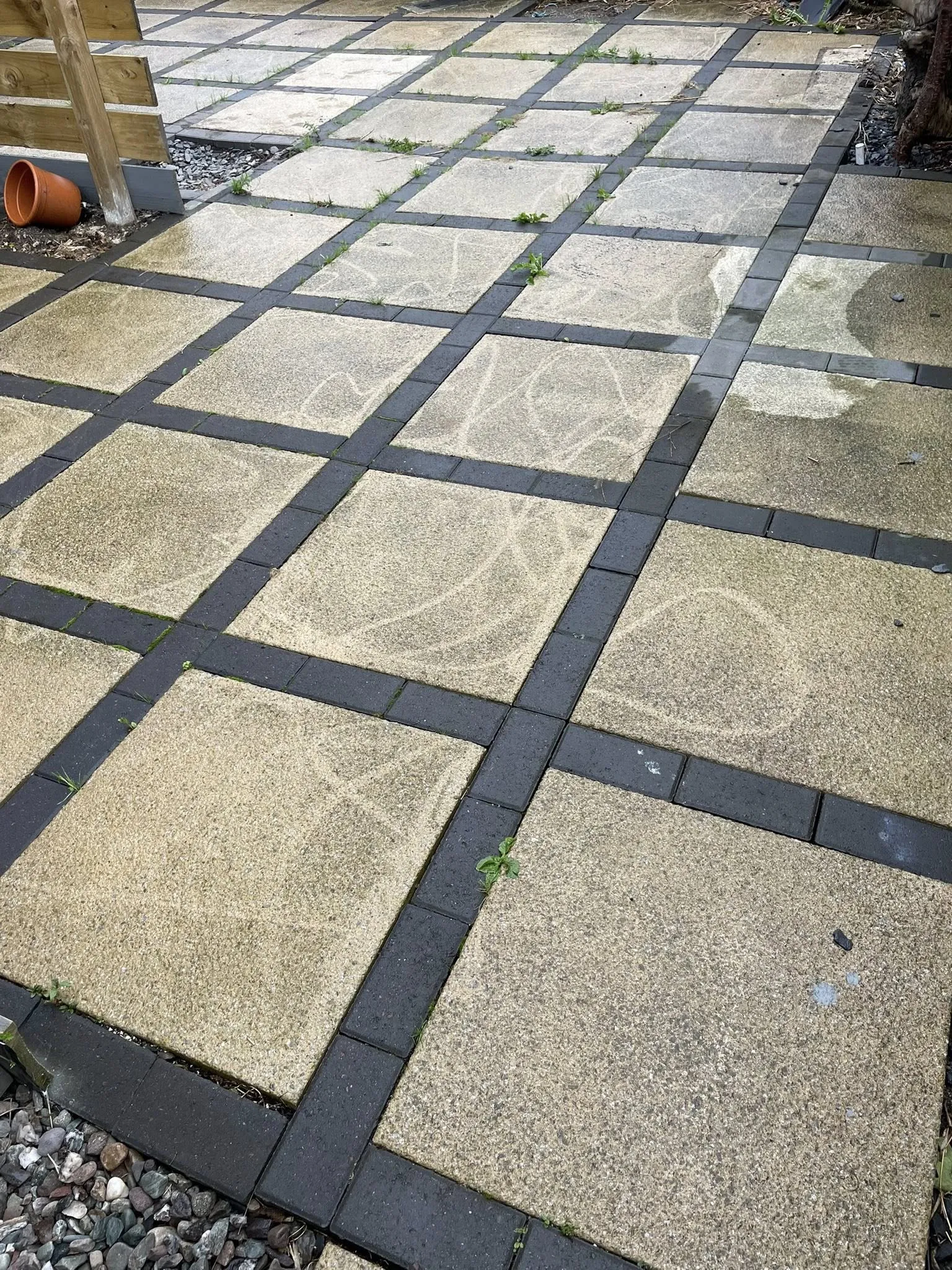
Take a look at your driveway on the next dry morning. If it's green — and most Fife driveways are by March — that's not just dirt. That's months of algae and moss that've had the run of your block paving, tarmac, or stone while the sun was too low and the weather too wet to slow their growth. And if those green patches are on steps or paths, they're a genuine slip hazard — not something to leave until the mood takes you.
Spring is the peak season for driveway and patio pressure washing across Fife, and with good reason. The worst is over, the growth is fully visible, and a single professional clean can transform a surface that's been quietly deteriorating since October.
Why Fife Winters Are Particularly Hard on Driveways
Fife sits on the east coast of Scotland, which means high annual rainfall, persistent coastal damp, and a winter sun that barely gets above the roofline for months. That combination creates near-perfect conditions for biological growth on hard surfaces:
- Moss establishes quickly in damp, shaded joints between block paving and in the textured surface of tarmac. Once established, it spreads laterally and lifts paving joints from below.
- Green algae coats concrete and natural stone slabs with a slippery film that becomes genuinely dangerous when wet — which in Fife means most of the time between October and April.
- Freeze-thaw damage — water that enters cracks in concrete or the joints of block paving freezes, expands, and widens those cracks with each cycle. Over a typical Fife winter with multiple freeze-thaw events, this causes cumulative structural damage to the surface that worsens every year it goes unaddressed.
- Deep staining — oil, fuel residue, and tyre marks that have sat untreated through a wet winter become harder to remove with every passing month as they bond to porous surfaces.
Block Paving, Natural Stone, and Tarmac — Different Surfaces, Different Approaches
Not all driveway surfaces respond the same way to pressure washing, and using the wrong approach causes damage rather than cleaning. This is one of the main reasons professional cleaning delivers better results than DIY hire machines.
Block paving needs careful pressure calibration — too high and the kiln-dried sand in the joints is blasted out, leaving the blocks loose and unstable. We clean block paving at the right pressure to shift grime without displacing joints, and where re-sanding is needed we can carry that out on the same visit.
Natural stone — sandstone, slate, and granite — is porous and can be damaged by high-pressure water at close range. We use appropriate standoff distances and where necessary apply a biocide treatment prior to washing to break down biological growth without relying on pressure alone.
Tarmac responds well to professional cleaning but needs degreaser pre-treatment for oil stains rather than pressure alone, which can drive oil further into the surface rather than lifting it.
Moss on Steps and Paths — a Safety Issue, Not Just Cosmetic
Green algae and moss on steps, garden paths, and sloped driveways are genuinely hazardous in wet conditions. Fife's climate means those surfaces are wet for a significant portion of the year, which means the slip risk is essentially continuous through winter and spring.
This matters more when elderly family members use those paths, when the slope is more than a degree or two, or when the surface is smooth stone or tarmac rather than textured concrete. We see avoidable falls every year that could have been prevented by a routine pressure wash. It's one of those jobs that feels like maintenance until it isn't.
What Spring Pressure Washing Actually Achieves
A professional spring pressure wash does several things that a DIY attempt rarely manages: it removes the full depth of biological growth including root systems, not just the visible surface layer; it treats stained areas with appropriate pre-treatment chemicals rather than relying on water pressure alone; and it leaves the surface in better condition for longer, particularly when a biocide sealer is applied after cleaning.
The visual result is significant — surfaces that have looked grey and tired for years often come back to something close to their original colour after a single thorough clean. Customers regularly tell us they didn't realise their block paving had that colour underneath.
Getting It Done Before the Diary Fills Up
March and April are the best months to book driveway and patio pressure washing across Fife. The growth is visible and accessible, drying conditions are improving, and we typically have better availability than in May and June when the spring rush is in full swing.
We cover all surface types across Kirkcaldy, Dunfermline, Glenrothes, Leven, Cupar, and the rest of Fife. See the full list of surfaces we treat on our pressure washing service page. Driveway cleans from £80 depending on size; patios from £60. We quote on site so there's no guesswork.
The RHS guidance on hard surfacing maintenance recommends annual moss and algae removal from block paving and stone surfaces to prevent long-term joint damage — in Scotland's damp climate, this is especially relevant.
Get in touch for a free quote or call 07572 454128— we'll give you a realistic price and an honest assessment of what your surface needs.
Need a quote?
Free quotes across all of Fife. We respond within a few hours — usually much faster.
Get a Free Quote07572 454128