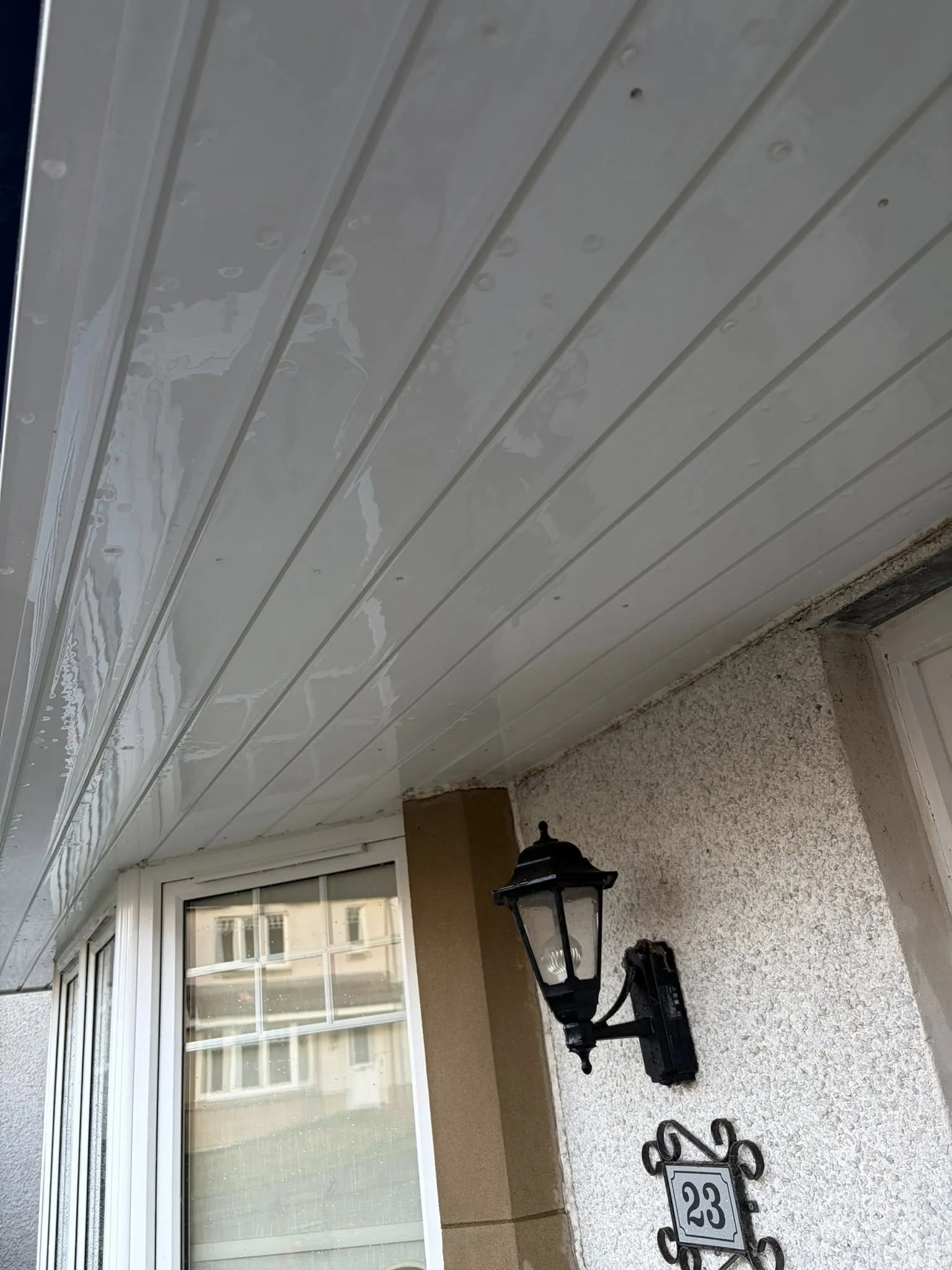
Most homeowners spend the winter months not looking up. That is understandable — it is cold, it is wet, and there is not much you can do about the roofline in January. But come April, when the weather breaks and you finally take a proper look, the picture is often worse than expected. Streaked fascia boards, green soffits, dark staining at the eaves — all of it accumulating quietly while you were getting on with other things.
In Fife, the roofline takes a particular beating over winter. High rainfall, persistent damp, and the freeze-thaw cycles that run from October through to March all work on fascias and soffits in ways that are easy to miss until spring reveals the damage. The good news is that spring is also the best time to deal with it — before bird nesting season makes roofline access more complicated, and before summer rain drives any existing moisture deeper into boards that are already softening.
What a Fife Winter Does to Fascias and Soffits
Fascia boards run along the lower edge of the roof, carrying the guttering and forming the visible front edge of the roofline. Soffits sit underneath, filling the gap between the fascia and the wall. Together they protect the roof structure from water ingress and provide ventilation to the roof space.
Through a Scottish winter, several things happen to them simultaneously:
- Algae and moss growth — the damp, low-light conditions between November and March are ideal for biological growth. By April, soffits that face north or sit under overhanging guttering are often visibly green.
- Black streaking — organic material from blocked or overflowing gutters runs down the fascia face and stains it. This is partly cosmetic but also a sign that the guttering above needs attention.
- Moisture absorption — timber fascias in particular absorb moisture over a wet winter. If the paint surface has any cracks or age-related flaking, water gets in. Repeated freeze-thaw cycles then open up those cracks further, leading to softening and eventual rot.
- Cobwebs and debris buildup — soffits, especially around the ventilation perforations, accumulate spider webs, dead insects, and wind-blown debris over winter. This can block ventilation and create conditions for damp in the roof space.
uPVC vs Timber — Does It Make a Difference?
Most Fife properties built after the mid-1980s have uPVC fascias and soffits, and the majority of older properties have had them replaced at some point. uPVC is more resistant to moisture than timber and does not rot, but it is not maintenance-free.
Over time, uPVC develops a chalky surface oxidation that holds onto algae and grime. It also discolours — particularly on north-facing elevations — going from bright white to a patchy grey-green. A professional clean restores the original colour and removes the biological growth that would otherwise continue to spread.
Timber fascias need more attention. If the paint surface is intact, timber performs reasonably well through a Fife winter. But any crack, joint, or area where paint has lifted becomes a point of water entry. If you have timber fascias and have not had them cleaned and inspected in the last couple of years, spring is the time to do it — identifying early softening now costs significantly less than a full fascia replacement later.
The Bird Nesting Problem
This is a practical issue that catches a lot of Fife homeowners off guard. From April onwards, birds — particularly sparrows, starlings, and swifts — begin nesting. Gaps in soffits, particularly where ventilation panels have cracked or come loose, are prime nesting spots.
Once a nest is active, it is protected under the Wildlife and Countryside Act 1981 — it cannot be disturbed until the brood has fledged. That can mean waiting until July or August before any roofline work can proceed. Getting fascias and soffits cleaned and any gaps sealed before birds settle in is the sensible approach.
March and early April is the window. By mid-April in Fife, nesting activity is well underway.
What Professional Soffit and Fascia Cleaning Involves
Roofline cleaning is not the same as pressure washing a driveway. Working at height with the right equipment, in a way that does not damage the boards or force water behind the fascia face, requires care and proper access.
A professional clean covers:
- Removal of biological growth — algae, moss, and lichen — using appropriate cleaning solution
- Cleaning of the fascia face, soffit underside, and barge boards
- Clearing of debris from soffit ventilation perforations
- Visual inspection of the boards while working — noting any cracking, softening, or areas where paint has lifted on timber
- Checking the guttering brackets and joins are secure while accessible
We also flag anything that looks like it needs further attention — whether that is a section of fascia that is beginning to soften, a soffit panel that has come loose, or a gutter join that is starting to leak. You get an honest assessment, not a sales pitch.
Soffit and Fascia Cleaning Across Fife
We cover all of Fife for soffit and fascia cleaning — Kirkcaldy, Glenrothes, Dunfermline, Leven, Cupar, St Andrews, Burntisland, Kinghorn, Cowdenbeath, Inverkeithing, Aberdour, and the surrounding area. With over 22 years of experience working on Fife properties, we know the common issues that come up on the rooflines here — from the salt exposure that accelerates staining on coastal properties in Burntisland and Kinghorn, to the north-facing elevations in Glenrothes housing schemes that barely see direct sun between October and March.
Soffit and fascia cleaning is often combined with a gutter clear at the same visit — see our gutter cleaning service for details. If you are also dealing with streaked or stained render on the exterior walls, our pressure washing service covers that in the same visit. For the full roofline package, our soffit and fascia cleaning service page has more information on what is included and how we work.
Book Before the Season Gets Busy
April and May fill up quickly. Homeowners across Fife all tend to notice the same thing at the same time of year, and spring is our busiest period by some margin. If you are looking at your roofline and thinking it needs attention, the best time to book is now rather than in six weeks when the diary is full.
Call 07572 454128 or send us a message for a free, no-obligation quote. We respond quickly and can usually arrange a visit within a few days.
Need a quote?
Free quotes across all of Fife. We respond within a few hours — usually much faster.
Get a Free Quote07572 454128